
Overview
Estuaries is a Momus residency presented in partnership with Forge Project, a Native-led arts and decolonial education initiative. Led by Dr. Léuli Eshrāghi (Sāmoa) and Candice Hopkins (Carcross/Tagish) the residency will take place in two parts: virtually and in-person at Forge Project, located on the unceded homelands of the Mu-he-con-ne-ok (People of the Waters that are Never Still) in Upstate New York.
Residency participants will develop texts, participate in professional development, and share in community-based mentorship informed by the breadth of global Indigenous art criticism and cultural protocols.
Leading writers, artists, curators, and scholars belonging to
Indigenous communities around the world will lead seminars, workshops, and other activities. Their respective approaches to mentorship will
bring together multiple forms of Indigenous writing and voicing.
Program
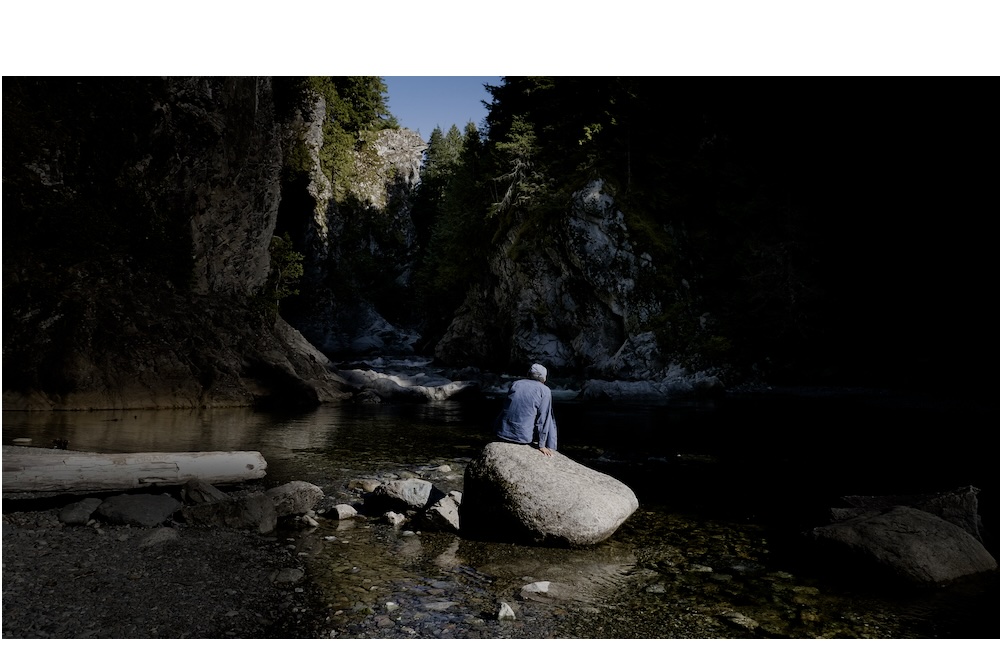
Estuaries will consider how histories can be strengthened in their expansion and transmission between generations and territories through visual, gestural, and verbal languages. It will focus on river- and lake-shores, springs and estuaries, as storied places of local Indigenous nations as well as sites of reciprocity and entanglement between many living beings.
Lines of inquiry will center questions such as: Which forms of mark making, writing, and/or critique are most salient to our communities and why? In considering Indigenous art criticism as a form of engagement, what do ancestral practices in ceremony, governance, and kinship teach us? How do diverse Indigenous aesthetics and knowledges interact between and across Indigenous nations, territories, and art worlds? What does water teach us, and how is it different in states of being such as salt, fresh, clean, dirty, mixed?
There is no fee to participate and costs associated with participation will be covered by the organizers, including travel and accommodation.
Testimonials
I thought the leaders were incredibly inspiring and engaging. The full-time leads were very close with us and made us feel comfortable and valued and the daily speakers were also very insightful. Particularly interesting to see international perspectives and how they intersect with my own cultural experiences and where they differ.
—Napatsi Folger
“I hoped to connect with other Indigenous art writers, gain tools and ideas related to the work that we do, be inspired to think about how to organize an art writing workshop and have some time to write. This was an incredible experience and I am honored for the opportunity to participate. I appreciate all of the time that went into making this residency special for all of us.”
—Nadia Jackinsky-Sethi
“There is extreme value in having a residency comprised of only Indigenous peoples. This was a major factor in my decision to participate. There are not many spaces in which this is the case. I think it’s very important to have Indigenous only spaces. Even though we come from our own particular locations, there is a shared understanding of colonial history and Indigenous knowledges. This shared understanding is so important in order to truly create generative spaces to learn and to innovate or further our ideas and practices.
—Alexandra Nordstrom